Understanding the Cost Difference Between DIY and Professional Pest Control
When pests invade your home, your first reaction is usually kind of simple, like “How do I get rid of them fast without spending too much money?” Whether it’s ants in the kitchen, cockroaches in the bathroom, termites in wooden furniture, or those scratching sounds that seem to come from inside the walls, homeowners often end up facing the same fork in the road:
Should I try DIY pest control methods or hire professional pest control services?
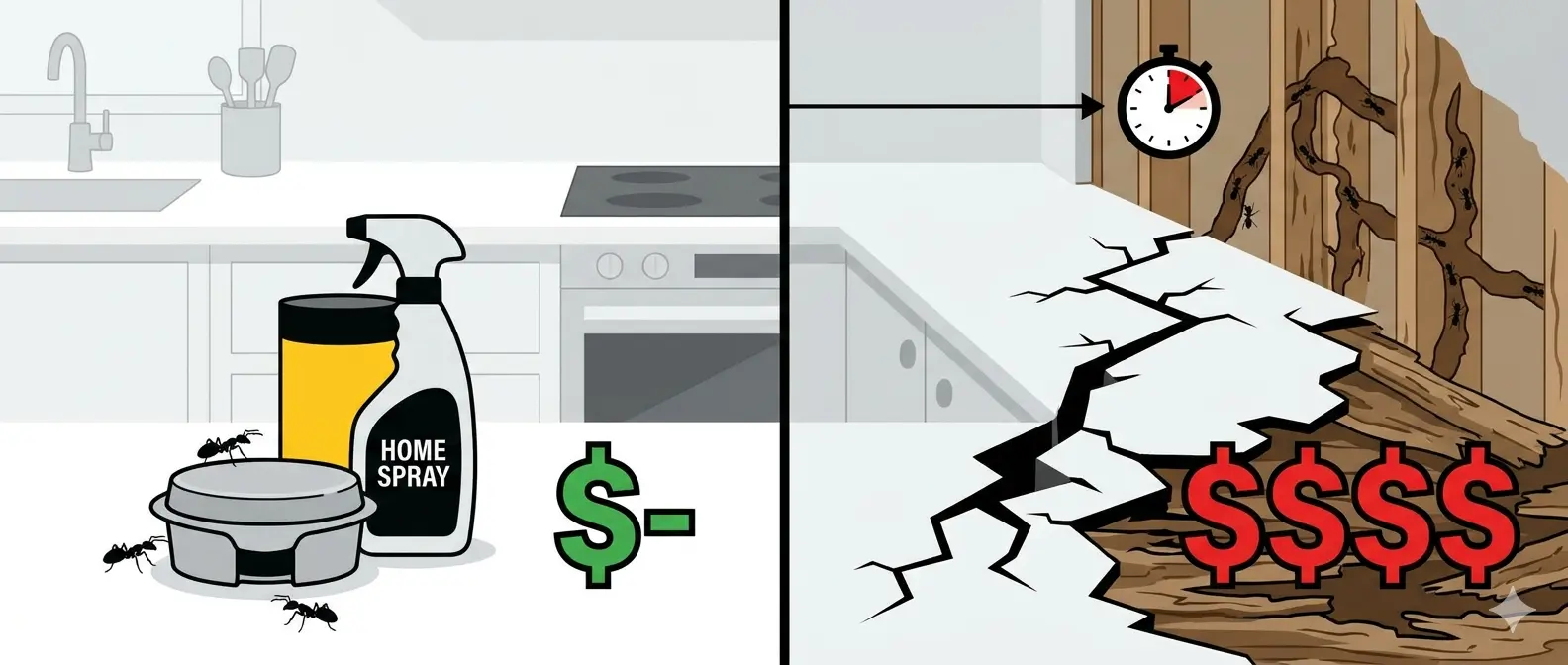
At first glance, DIY solutions can look like the cheaper road. Like, a spray bottle, a few traps, or some store-bought pesticides seem way less expensive than paying a pest control company.
But the real question isn’t really about the starting price. It’s more about what gives better value and helps you save more money over time.
And honestly, it depends. What kind of pest problem you have, how severe it is, and how well the situation gets handled in the first place.
So let’s put DIY vs. expert pest control side by side and see which one actually delivers stronger long-term results.
Understanding DIY Pest Control
DIY pest control involves using store-bought products and self-applied treatments to eliminate pests.
Many homeowners choose DIY treatments because they are readily available and can be applied immediately after noticing pests.
Common DIY pest control methods include:
-
Pest sprays
-
Glue traps
-
Ant bait stations
-
Rodent traps
-
Natural repellents
-
Home remedies
-
Perimeter spraying
Advantages of DIY Pest Control Methods
DIY solutions can be useful in certain situations.
1. Lower Initial Cost
One of the biggest reasons people choose DIY pest control methods is affordability.
Most products cost between ₹200 and ₹2,000 depending on the pest and treatment type.
2. Immediate Action
You don't need to wait for an appointment.
The moment you notice ants, spiders, or flies, you can take action immediately.
3. Full Control
Some homeowners prefer handling pest issues themselves because they know exactly where products are being applied.
4. Effective for Minor Pest Problems
When infestations are minor and caught early, DIY treatments may provide a cost-effective solution.
DIY solutions can work well for:
-
Occasional ants
-
Houseflies
-
Seasonal spiders
-
Small insect sightings
The Limitations of DIY Pest Control
While DIY treatments appear affordable, they often fail to address the root cause of pest infestations.
Treating Symptoms Instead of the Source
You may eliminate a few pests today while hundreds remain hidden elsewhere. Most consumer products focus on killing visible pests.
However, the real problem often exists inside:
-
Walls
-
Furniture
-
Roof voids
-
Foundations
-
Hidden nests
Incorrect Pest Identification
Different pests require different treatment methods.
Many homeowners misidentify pests and end up using ineffective products.
This often leads to wasted money and repeated treatments.
Safety Risks
Store-bought pesticides can be harmful if not used correctly.
Without proper knowledge and protective equipment, DIY treatments can become unsafe.
Improper use may create risks for the following:
-
Children
-
Pets
-
Elderly family members
-
Pregnant women
Recurring Infestations
One of the biggest hidden costs of DIY pest control is like repeated spending… over and over.
Homeowners will often buy more than one product, across several months, and they don’t fully wipe out the infestation, not really.
So what begins as a small expense turns into a steady loop of spending, which feels kind of endless.
When DIY Pest Control Actually Makes Sense
In these situations, DIY solutions often provide excellent pest control savings. Not every pest problem requires professional intervention.
DIY methods can be effective when:
Dealing with Seasonal Pests
A few houseflies or seasonal spiders usually don't require professional treatment.
Early Ant Activity
If a small trail of ants has recently appeared, bait stations and proper cleaning may solve the issue before the colony grows.
Preventive Maintenance
Simple home pest control tips such as:
-
Sealing cracks
-
Fixing leaks
-
Removing food sources
-
Improving sanitation
Understanding Professional Pest Control Services
Professional pest control services are handled by trained technicians who inspect, identify, treat, and help stop pest infestations using specialized gear and products that are approved by the industry.
Instead of concentrating only on the pests you can see, they go after the whole infestation, not just the obvious activity that pops up.
The outcome they aim for is long-term eradication and prevention, rather than a quick patch.
Advantages of Professional Pest Control Services
Accurate Pest Identification
Professionals understand pest behavior, nesting patterns, and breeding habits.
This allows them to select the most effective treatment strategy.
Treatment of Hidden Infestations
Many pests hide in places homeowners rarely inspect.
This makes expert pest extermination far more effective than most DIY treatments. Professional technicians can identify activity inside:
-
Wall voids
-
Foundations
-
Roof spaces
-
Furniture
-
Drainage systems
Advanced Products and Equipment
Licensed professionals have access to products and treatment methods that are not available to the general public.
These treatments often provide longer-lasting results and better colony elimination.
Long-Term Prevention
Many companies also provide pest prevention services that reduce the likelihood of future infestations.
This proactive approach supports effective long-term pest management.
Service Guarantees
Most reputable companies offer warranties or service guarantees.
If pests return within a specified period, additional treatments are often provided at no extra cost.
Pest Control Cost Comparison: DIY vs Professional Services
Many homeowners focus only on the initial cost.
When infestations become severe, professional treatment often results in greater pest control savings over time.
However, a proper pest control cost comparison should consider long-term expenses as well.
DIY Pest Control
Initial Cost:
-
Low upfront investment
Potential Long-Term Costs:
-
Repeated product purchases
-
Ineffective treatments
-
Property damage
-
Health risks
-
Time investment
Professional Pest Control Services
Initial Cost:
-
Higher upfront expense
Long-Term Benefits:
-
Faster elimination
-
Lower risk of recurrence
-
Reduced property damage
-
Expert advice
-
Long-term protection
Why DIY Often Fails Against Serious Pests
Certain pests are extremely difficult to eliminate without professional help.
Termites
Termites can silently destroy wooden structures for years before homeowners notice the damage.
A small treatment mistake can allow colonies to continue growing behind walls and foundations.
The cost of structural repairs can be significantly higher than professional termite treatment.
Bed Bugs
Bed bugs are experts at hiding.
Professional heat treatments and specialized applications are usually required.
They often survive DIY treatments because they remain hidden inside:
-
Mattresses
-
Furniture
-
Cracks
-
Upholstery
Cockroaches
Cockroaches reproduce quickly and thrive in hidden environments.
Spraying visible cockroaches rarely eliminates the colony.
This is where expert pest extermination becomes necessary.
Rodents
Mice and rats often enter through hidden access points.
Without identifying entry locations and nesting areas, rodent problems typically return.
Long-Term Pest Management: Prevention Is Better Than Treatment
One of the biggest differences between DIY and professional services is that prevention kind of takes the front seat.
Stopping future infestations usually costs way less than dealing with the same recurring mess over and over again, you know. The pros tend to stress long-term pest management, not just quick elimination today.
This often includes:
-
Entry point inspections
-
Moisture control recommendations
-
Sanitation guidance
-
Structural assessments
-
Follow-up monitoring
Home Pest Control Tips for Every Homeowner
These simple habits support both DIY and professional pest management strategies.
Regardless of whether you choose DIY or professional treatment, these home pest control tips can help reduce pest activity:
-
Store food in airtight containers
-
Repair leaking pipes
-
Seal cracks and gaps
-
Dispose of garbage regularly
-
Remove standing water
-
Keep kitchens clean
-
Trim vegetation near the house
-
Schedule regular inspections
When Should You Call a Professional?
In these situations, professional pest control services are often the most cost-effective solution.
Professional treatment is strongly recommended if you notice:
-
Repeated infestations
-
Large pest populations
-
Termite activity
-
Bed bugs
-
Rodent infestations
-
Structural damage
-
Hidden nests
-
Unsuccessful DIY attempts
Why Choose Pragya Pest Management?
At Pragya Pest Management, we understand that every pest problem is different.
We focus on identifying the root cause of infestations and delivering affordable pest control solutions that provide lasting results.
Our goal is not just to remove pests—but to keep them from coming back.
Our team provides:
✔ Termite Control Services
✔ Cockroach Control
✔ Rodent Management
✔ Bed Bug Treatment
✔ General Pest Control
✔ Commercial Pest Solutions
✔ Residential Pest Protection
✔ Preventive Pest Inspections
✔ Long-Term Pest Management Programs
Final Verdict: DIY vs Expert Pest Control
When comparing DIY vs. expert pest control, it’s really hard to say there’s a single, one-size-fits-all kind of answer.
For smaller, sporadic pest problems, DIY remedies can work decently and cost less too.
But if you’re facing recurring infestations, secret colonies, termites, bed bugs, rodents, or cockroaches, then the professional approach is usually the smarter financial call, overall.
The real value of professional pest control services comes from:
-
Accurate diagnosis
-
Effective treatment
-
Long-term prevention
-
Reduced property damage
-
Better safety
-
Greater peace of mind
FAQs About DIY vs Expert Pest Control
1. Is DIY pest control cheaper than professional pest control?
DIY pest control has a lower upfront cost, but recurring infestations and repeated product purchases can make it more expensive over time.
2. When should I hire professional pest control services?
You should hire professional pest control services for termites, bed bugs, rodents, cockroaches, recurring infestations, or hidden pest problems.
3. Are DIY pest control methods effective?
DIY pest control methods can work for minor pest issues such as ants, flies, and occasional spiders when detected early.
4. What are the benefits of expert pest extermination?
Expert pest extermination provides accurate pest identification, targeted treatments, long-term prevention, and better success rates.
5. How does long term pest management save money?
Long term pest management focuses on prevention and early detection, reducing future infestations and costly property damage.
6. Are professional pest control services safe for families?
Yes. Licensed professionals use approved products and application methods designed to minimize risks for families and pets.
7. What are some simple home pest control tips?
Keeping your home clean, sealing cracks, fixing leaks, storing food properly, and removing standing water are effective home pest control tips.
8. Does professional pest control offer better pest control savings?
In many cases, yes. Professional treatment often eliminates infestations faster and prevents recurring problems, resulting in greater pest control savings over time.